Gum Disease Care
- Home
- /
- Treatments
- /
- General Dentistry
- /
- Treatment for Gum Disease
If you are experiencing gum health problems, our dedicated gum health (periodontal) services can address damage and unpleasant symptoms associated with diseased gums.
Here’s how we can help stabilise gum disease and prevent it from recurring.
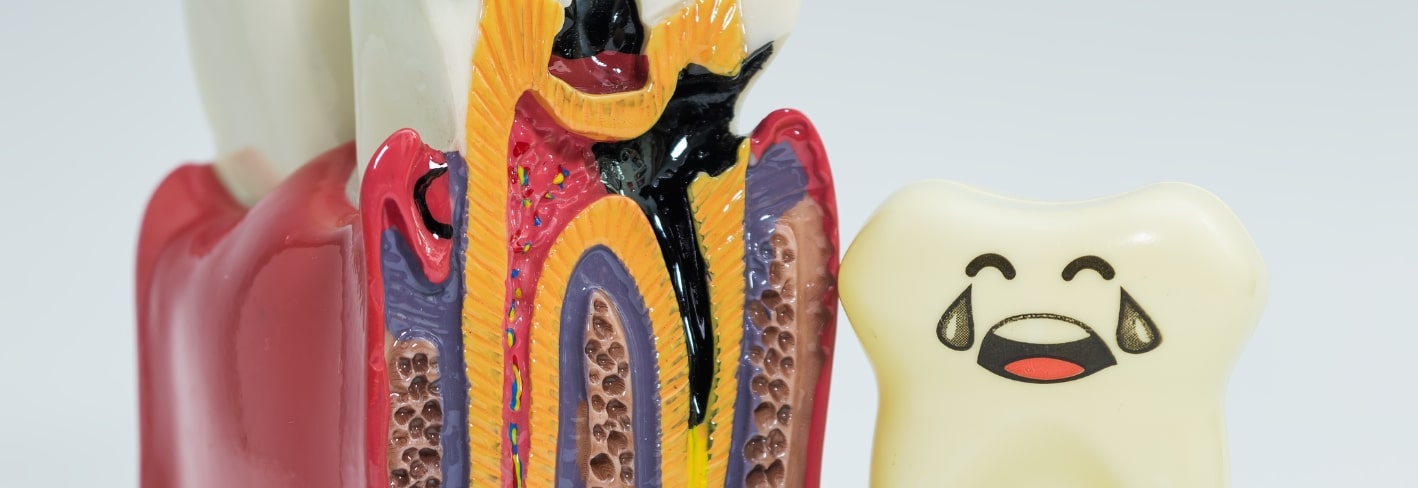
Gingivitis is the early onset of gum disease, characterised by bleeding and swollen gums. Once this progresses into periodontitis (advanced gum disease), your gums and supporting jawbone can start to deteriorate quickly.
The good news is that we can help, whether you’re suffering from gingivitis or periodontitis.
We can perform root planing treatment to get rid of the harmful layer of bacteria suffocating your gum line and the tooth roots sitting underneath the gums.
Gum disease is capable of eroding your gum line if it is allowed to progress. This is problematic from an aesthetic point of view, as your teeth will look longer. It also exposes the weaker portion of the tooth underneath to acid attacks in your mouth (the soft dentine).
When this becomes the case, we can carry out a gum graft to create new (healthy) gum to protect the affected and exposed teeth.
If gum disease has caused small pockets to form in your gums, these can be addressed with a gum graft to stop plaque from burrowing underneath your gum line and entering your bloodstream.
One of our most popular hygiene-based services is gentle tooth cleaning and polishing using our air polishing system.
We recommend air polishing to all patients, but particularly those who:
Our dentists are very experienced in treating gum disease, especially Dr Andrew Norman and Dr Alison McIntosh, who have done postgraduate training on the subject. Dr Andrew Norman is also able to provide advanced surgical procedures for treating gum disease.
Plaque is the waste substance created after you eat. Even very small amounts of sugar will cause a layer of plaque to form along your gum line. This solidifies over a period of months, and even the most rigorous of brushers and flossers amongst us will need to have this removed.
Leaving plaque to settle along your gum line for 6+ months can inflame the gums and eventually, it can literally eat away at your gum line, ligament and bone.
The best way to avoid this is to visit us for regular hygienist visits, which will reduce the possibility of needing more complex restorative gum treatment.
Gum disease can always be treated using periodontal techniques and a long-term plan to address multifaceted damage to the supporting ligament and bone. However, gum disease can cause loose teeth, which can become irrevocably damaged and need to be extracted.
In cases where it’s necessary to extract loose teeth that can no longer exist within the gum, we can provide tooth replacement with implants, bridges, or dentures.
It may surprise you, but there have been many proven links between gum disease and several systemic health issues because of the inflammation and bacteria involved. It is vitally important that dentists and patients.
Research has proven links between gum disease and:
It has never been more important to care for our teeth. Dental appointments are not just about teeth; they are about wellness.



I have been there for 15 years! Andrew is fantastic at giving painless applications and has a very professional and warm attitude towards the patients. I would give higher than 5 stars if I could.